

High-quality cosmetics photo editing services create a significant edge in today's visually competitive beauty market. Our 15 years of specialized experience shows how exceptional product imagery directly affects conversion rates and shapes brand perception. Your cosmetics photoshoot's quality can determine your product launch's success. More than 4000 global brands have placed their trust in our team of 200+ experienced retouchers with their most valuable visual assets over the last several years. The results tell a compelling story - 90% of our new clients become permanent partners, and 95% praise our communication excellence. On top of that, 98% of clients trust our expertise completely for complex cosmetics photography projects. This piece reveals professional techniques that turn ordinary product photos into compelling visual stories. Our approach to cosmetics photo editing can become your brand's secret competitive advantage, whether you're a cosmetics photographer looking for post-production support or a beauty brand that wants to raise your visual presence.
The Importance of High-Quality Cosmetics Photography
A striking image means everything in the beauty industry - it's not just a pretty picture. Research reveals that 93% of consumers make purchasing decisions based on visual appearance alone. This fact explains why beauty brands put so much money into professional photography and editing services to show their products in the best possible light.
Why Product Visuals Matter in Beauty Branding
People form first impressions within milliseconds. Beauty brands know these vital moments happen through a smartphone screen or computer monitor. Quality product visuals create an instant connection with potential customers who rely on photography to understand their purchases. The marketplace reality is clear - your customers have endless options at their fingertips. Beauty brands need captivating visuals that instantly show quality, effectiveness, and brand identity to stand out. Professional cosmetics photography acts as your brand's visual ambassador and tells your story without words. Quality product imagery builds trust with consumers beyond just looking good. Trust becomes even more vital since people apply makeup and skincare products directly to their body. Industry experts agree that authentic photography captures real results, building trust that's especially relevant in the beauty industry. Quality photography creates a unified brand identity across all channels. Look at how iconic beauty brands like Chanel's timeless monochrome elegance or Glossier's dewy pink minimalism show their unique style. These visual signatures become easy to spot, helping people identify and connect with brands they love. Beautiful cosmetics photography packs an emotional punch. One expert puts it this way: "When you see a shiny tube of lipstick, the client imagines how it'll shine on their lips. It's all about perception, and desires". Skilled photography and editing can spark powerful emotional responses that exceed rationality and tap into deeper customer desires.
How Cosmetics Photoshoot Quality Impacts Sales
Numbers prove the link between image quality and sales success. Studies show that:
- Products with high-quality images experience 33% higher conversion rates than those with lower-quality visuals
- Listings with professional photography receive 94% more views than those with low-quality images
- Adding high-resolution product images can increase conversions by 30% or more
- Products with multiple high-quality images have a 40% higher conversion rate
These numbers make sense since 75% of online shoppers rely on product photos when deciding on a potential purchase. Visual representation becomes essential for cosmetics because customers can't test products before buying. Quality photography reduces returns and customer dissatisfaction. Studies show 40% of consumers have returned products because they "looked different" from the photos. Accurate representation through professional photography helps retain customers, not just attract them. The cosmetics industry demands visual precision. Customers want to see products from multiple angles, with 69% needing at least three product images before making a purchase. Professional cosmetics photographers know how to capture texture, color accuracy, and application effects that can make or break a sale. Quality cosmetics photography boosts SEO performance too. Research shows that Google's search algorithm favors websites with interactive content. Real images and video content can improve your search rankings, making it easier for potential clients to find your products. Professional photography gives your brand a competitive edge in a crowded market. Many beauty companies use low-budget equipment for photography, and "you can tell," say industry experts. Quality cosmetics photo editing services create a clear difference between your brand and competitors who cut corners. The digital world has changed how people interact with beauty brands. Platforms like Instagram and Pinterest thrive on eye-catching visuals, where creative product images drive engagement. A cosmetics photoshoot that creates scroll-stopping imagery can boost your social media reach and brand awareness. Quality photography works as a strategic investment that pays off across your beauty business. An industry professional sums it up: "Professional product photography is more than just a nice-to-have—it's one of the most powerful sales tools health, wellness, and beauty brands can invest in".
Essential Photo Editing Techniques for Cosmetics
The perfect cosmetic image requires detailed post-production work. Specialized editing techniques transform basic photos into compelling visual stories. Let's look at everything in editing that makes beauty products so appealing.
Dust and Reflection Removal
Small details make a big difference when editing cosmetic photography. A single dust spot on a glossy lipstick or an unwanted reflection can ruin a perfect shot. Professional editing services make sure every image is spotless. Professionals use several methods to remove dust:
- AI-powered tools: Software like Adobe Camera Raw uses smart algorithms to detect and remove dust spots while keeping the product's texture intact
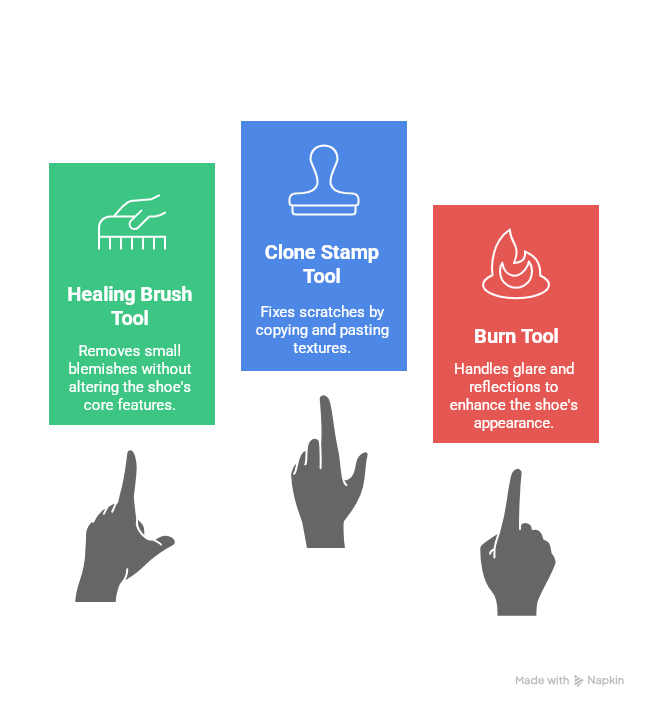
- Manual retouching: The Spot Healing Brush and Clone Stamp tools help editors fix issues pixel by pixel on cosmetics packaging
- Preventive techniques: Studios use air purifiers, thorough cleaning, and special equipment to reduce dust before editing starts
Reflections can be tricky in cosmetics photography because of all the glossy surfaces. Skilled editors manage these distractions with careful masking and retouching. "Reflection management is significant with glossy items". The goal isn't to remove all reflections - that would look fake. Instead, editors control them to make the product look better. Beauty products in glass or reflective packaging need a delicate touch. Editors must balance removing distracting reflections while keeping the natural properties that show the product's premium quality.
Color Correction and Recolonoring
Color accuracy is vital in cosmetics photography. Research shows that 22% of returns happen because products look different from their photos. This fact shows why getting colors right builds customer trust. Editors use special methods to correct colors: They start by making sure the white balance is neutral. Next, they adjust saturation and vibrancy to make true colors stand out naturally. Finally, they fine-tune specific color ranges to match brand specifications - this matters most for foundation shades, lipsticks, and eyeshadow palettes. Recoloring helps create consistent images across product lines without extra photoshoots for each shade. This works great for beauty brands with many color options. Editors can isolate colors using selective tools and adjust CMYK values to match brand swatches. All the same, color correction needs deep knowledge of different products. To cite an instance, tech products might look better with cool, silvery tones, while cosmetics need warm, vibrant colors that show their true look.
Drop Shadow and Mirror Effects
Shadows and reflections turn flat cosmetics photos into dimensional art. Drop shadows give products visual weight and prevent that amateur "floating" look. Drop shadows play a vital role in cosmetics images. They ground the product and create an illusion of real space. One expert points out that natural shadows "lend a photo with feelings of naturalness, truthfulness, and authenticity". Mirror effects add instant elegance and quality. This technique makes products look like they're sitting on glass or mirrored counters - just like luxury cosmetics in high-end stores. First surface mirrors create premium product photos. These mirrors create a "slick and polished feel to the image when the product touches its own reflection and there is no visible space between the product and its reflection". Luxury cosmetics, fragrances, and skincare products look amazing with this technique. Editors can add Gaussian blur to reflections for an even more sophisticated look that matches real-world optics.
Background Editing for Product Focus
Simple, clean backgrounds help customers focus on cosmetic products. This makes it easier to understand features and benefits, which boosts sales chances. Background editing changes based on brand needs and image purpose. Complete background removal gives flexibility. The same product image works with different backgrounds for various marketing materials. Online marketplaces that want pure white backgrounds love this approach. Some images need subtle background tweaks to remove distractions while keeping the original setting. This works well for lifestyle shots where the environment adds to the product's story. Background replacement lets brands use custom backgrounds that match campaign looks or brand identity. Luxury cosmetics might use sophisticated textures or lighting to enhance their premium feel. Quality background editing shows that brands care about presentation and builds trust. Experts say good editing shows "your business is dedicated to delivering the best, eventually pushing your sales and keeping your brand distinguished". These key techniques - dust and reflection removal, color correction and recoloring, shadow and mirror effects, and background editing - help beauty brands create compelling visual assets that drive interest and sales.
Creative Retouching for a Signature Look
A distinctive visual signature sets exceptional cosmetics photography apart from mere technical perfection. Brands need a unique esthetic that reflects their identity through creative retouching. Let me show you how leading beauty brands create their unmistakable style.
Combining Multiple Edits for a Cohesive Style
Photographers, content creators, and beauty brands need a recognizable esthetic that customers instantly connect with. Your cosmetics photography should stand out in crowded marketplaces and social feeds through visual consistency. Professional cosmetics photo editing services use this workflow to achieve consistency:
- Define a clear esthetic before editing begins
- Apply the same presets or editing workflow across all images
- Maintain consistent exposure and contrast to create balance
- Edit in batches to ensure uniformity across similar products
- Develop signature details that make your images instantly recognizable
Batch editing helps cosmetics brands with large product lines. Editors can copy and paste settings between photos from the same shoot. This ensures visual harmony throughout your catalog. Professionals know that over-editing creates inconsistency. Subtle and intentional adjustments work best. You should avoid excessive saturation, vibrance, or sharpening that might create an unnatural look.
Adding Shine, Texture, and Depth
Compelling visual stories emerge when dimension transforms flat product images. Your products become more enticing when you strategically add shine, texture, and depth to your imagery.
Shine plays a crucial role in cosmetics photography. Modern beauty imagery embraces strategic highlights, unlike traditional portrait photography's shine reduction approach. One expert notes, "Long gone are the days where we were desperately trying to matt-down skin to avoid the shine, now makeup artists are regularly being asked to produce the 'dewey' skin look".
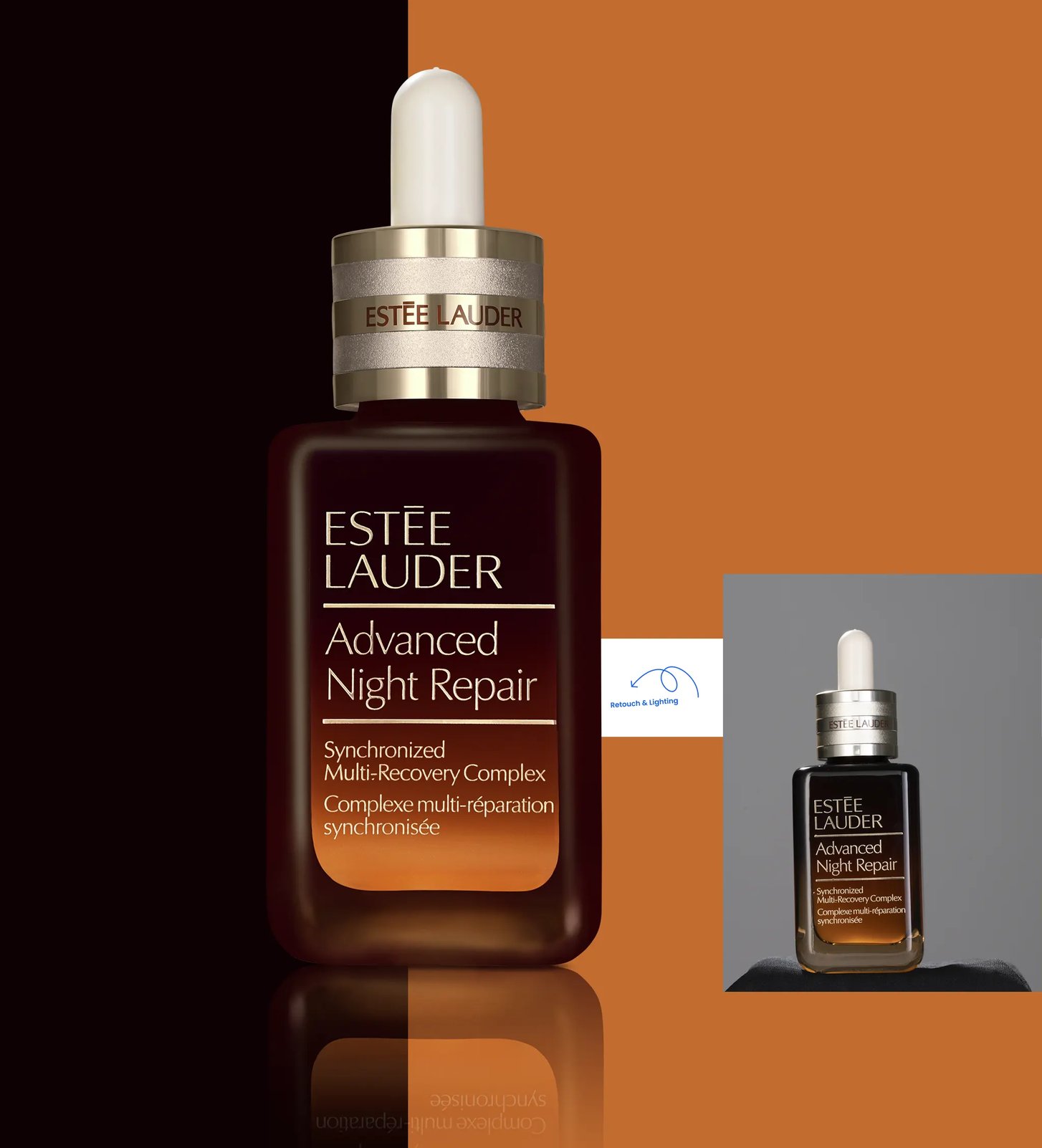 Professional cosmetics photographers create this effect through:
- Pre-shoot preparation with specialty products like glycerin (perfect for beaded "sweat" effects), hair sheen sprays (which don't require hand application), or after-shower mists (for even application)
- Strategic lighting enhances the product's natural shine. Natural light creates soft, organic beauty that improves warmth and earthy tones. Studio lighting makes bright or dramatic colors pop
- Post-production enhancement uses curves adjustment layers to target and magnify highlights without affecting other areas of the image
This technique balance creates depth that draws viewers into the image. Professional retouchers keep just enough texture to maintain authenticity while removing distractions. Luxury cosmetics brands benefit from subtle shine effects on packaging. A makeup palette's carefully enhanced reflections or a foundation bottle's perfect highlight points speak of premium quality before customers read any copy.
Preserving Brand Color Tones
Brand recognition depends on color consistency. Professional photo editors ensure your signature hues stay consistent across platforms and products. Your shoot's lighting affects how colors appear on camera. Natural light suits soft, airy tones perfectly. Golden hour gives warm tones a dreamy glow. Studio lighting makes bright or dramatic colors vibrant. Perfect color capture during the shoot needs careful preservation during editing. One expert warns, "Avoid filters that drastically alter your palette—your brand colors should feel authentic and true". Professional retouchers maintain color integrity by:
- Adjusting white balance to maintain neutral tones
- Making selective color adjustments to enhance or mute specific hues
- Using the same color grading approach across all images
- Referencing brand color guides to ensure accuracy
Beauty brands sometimes focus too much on finding the perfect color palette. A cohesive style combines color, esthetic, fit, and overall visual approach. Successful cosmetics brands know that seasonal trends change. Your signature look builds recognition and trust through consistency. Creative retouching should reflect your brand's core identity while allowing artistic expression to keep imagery fresh and engaging. Your cosmetics photography will develop an instantly recognizable style when you combine multiple editing techniques thoughtfully. Add dimensional elements like shine and texture, preserve your signature color tones, and customers will know your brand immediately.
Tailored Editing for Different Product Types
Each cosmetic product just needs its own editing style that expresses its unique features. A technique that works for matte lipstick might not improve the look of a glass perfume bottle or skincare packaging. Let's look at how professional cosmetics photo editing services adapt their methods for different product categories.
Makeup Products: Swatches, Palettes, and Crushed Textures
Makeup swatches help customers see the true color, texture, and pigmentation of products they can't test in person. These small samples make it easier to compare shades and see how products look in real life. Product consistency is vital during swatch photo creation. Professional photographers use:
- Stencil swatch stickers placed in similar positions (typically 5-7cm above the wrist crease) to create uniform shapes
- Rubber tools to create smooth, even application with a single swipe
- Multiple models with different skin tones that help customers visualize how products appear
Lines of varying intensities show the versatility of solid makeup products like pencils, crayons, and eyeliners. Eyeshadow palettes need both whole-product shots and individual color demonstrations.
Crushed powder photography adds artistic flair to cosmetics imagery. These shots emphasize the rich texture and vibrant pigmentation inside pressed powders. Photographers break or crush products carefully to create appealing textures that show quality and intensity.
You might want to shoot multiple versions of each product—one pristine for macro shots and another for creative displays. One expert suggests: "Plan to keep one untouched for macro shots and use the other to play around with for swatching, smearing, and modeling".
Perfume and Fragrance Bottles
Perfume photography comes with a unique challenge—capturing something invisible. The goal extends beyond photographing beautiful bottles to bringing the fragrance's essence to life through visual storytelling. Glass and reflective surfaces need precise lighting control. Professional photo editing services tackle these challenges by:
- Using softboxes, diffusers, and bounce cards to manage glare
- Placing black foam boards strategically to shape reflections
- Applying honeycomb grids to provide soft, directed light
- Careful retouching to keep intended highlights while removing distractions
Background choice shapes the mood dramatically. Simple yet sophisticated backgrounds work best for luxury fragrances—minimalist approaches emphasize the bottle's design clearly. The fragrance's story guides appropriate imagery creation. Light floral scents might look best with soft natural light and fresh flowers, while dark, woody colognes could benefit from deeper shadows and textured backgrounds.
Hair and Skincare Product Packaging
Hair and skincare products often come in unique packaging that calls for specialized editing approaches. These items usually mix multiple materials—glass, plastic, metal, and paper—each needing different retouching techniques. Texture enhancement matters most for skincare products. Editors focus on showing the creamy consistency of moisturizers or the transparency of serums. Natural light creates exceptional results for skincare product photography, especially during golden hours after sunrise and before sunset. Hair products often feature vibrant packaging that demands precise color accuracy. Editors ensure brand colors stay consistent through selective color adjustments and brand guide references. Props create essential context for these products. Elements like colored blocks, fresh fruit, flowers, water, or mirrors help tell a lifestyle story. These props should "emphasize your beauty products and your beauty images to help tell your brand story". A skilled cosmetics photographer and editor can create imagery that shows products accurately and captures their essence by tailoring approaches to each product category. Success comes from combining technical expertise with artistic vision effectively.
Behind the Scenes: How a Cosmetics Photographer Collaborates with Editors
Quality cosmetics imagery comes from a carefully coordinated dance between photographers and editing professionals. Professional beauty brands seeking quality results no longer accept the old mindset of "I'll just fix it later in Photoshop."
Arranging Shoot Goals
A strong foundation for exceptional results starts with arranging creative vision between photographers and editors before any cosmetics photoshoot. Professional photographers dedicate substantial time during shoots to minimize post-production corrections. The collaboration starts much earlier. Both parties need a mutual understanding of their respective roles. The photographer becomes the creative director who guides artistic elements and logistical considerations. Every team member should know their exact expectations through clear communication. Clear communication is the life-blood of successful photographer-editor partnerships. "Even the most stunning raw image can fall short in post-production—not because of skill, but because of miscommunication". This insight shows why arranged expectations upfront create stronger results with fewer revisions. Successful collaborators follow several essential practices:
- Provide visual references – Words like "clean" or "bold" mean different things to people. The desired mood, contrast, and style become more precise with 2-3 edited examples rather than descriptions alone.
- Create detailed briefs – Detailed shoot briefs work as roadmaps for both photographers and editors. These should include:
- Project overview (purpose and desired outcome)
- Key visual goals (colors, mood, brand values)
- Composition priorities (angles, close-ups, wide shots)
- Technical requirements (lighting, editing priorities)
- Establish feedback cycles – One or two review rounds allow adjustments to tone or texture direction. Context-specific feedback explains why something isn't working instead of just noting "too much".
The photographer-editor relationship runs on mutual recognition of interdependence. "By working closely with photographers, stylists, and models, makeup artists help create visuals that strike a chord with audiences and capture the desired mood of the project". This principle applies equally to editing professionals.
Outstanding cosmetics photography depends on cooperative excellence rather than individual talent. When photographers and editors arrange their goals from the start, the final images exceed technical perfection and capture genuine emotion that connects with viewers.

Key Takeaways
Professional cosmetics photo editing transforms ordinary product images into powerful sales tools that drive conversions and build brand recognition in the competitive beauty market.
- Visual quality directly impacts sales: Products with high-quality images see 33% higher conversion rates and 94% more views than those with poor visuals.
- Master essential editing techniques: Focus on dust removal, color correction, drop shadows, and background editing to create polished, professional cosmetics imagery.
- Develop a signature visual style: Combine multiple editing techniques consistently across all products to build instant brand recognition and customer trust.
- Tailor editing to product types: Different cosmetics require specialized approaches—swatches need color accuracy, perfumes need mood creation, skincare needs texture enhancement.
- Collaborate from the start: Align photographer and editor goals before shooting with detailed briefs, visual references, and clear communication to minimize revisions.
When executed properly, professional cosmetics photo editing becomes your brand's secret weapon for standing out in crowded marketplaces, reducing product returns, and creating the emotional connections that turn browsers into loyal customers.
FAQs
Q1. How does high-quality cosmetics photography impact sales? High-quality cosmetics photography significantly boosts sales, with products featuring professional images experiencing up to 33% higher conversion rates and 94% more views compared to those with lower-quality visuals.
Q2. What are some essential photo editing techniques for cosmetics products? Essential photo editing techniques for cosmetics products include dust and reflection removal, color correction and recoloring, adding drop shadows and mirror effects, and background editing to enhance product focus.
Q3. Why is developing a signature visual style important for beauty brands? Developing a signature visual style is crucial for beauty brands as it creates instant brand recognition, builds customer trust, and helps products stand out in crowded marketplaces and social media feeds.
Q4. How should editing approaches differ for various cosmetic product types? Editing approaches should be tailored to different cosmetic product types. For example, makeup products require accurate color representation in swatches, perfume bottles need careful reflection management, and skincare products often benefit from texture enhancement.
Q5. What's the importance of collaboration between photographers and editors in cosmetics photography? Collaboration between photographers and editors is vital in cosmetics photography. Aligning goals, sharing visual references, and maintaining clear communication from the start helps minimize revisions and ensures the final images effectively capture the brand's vision and appeal to the target audience.
Get Free Trial: [https://studiometrodesk.com/free-trial]
Get A Quote: [https://studiometrodesk.com/get-quote]
Abdul Hashib Bipu
05 Dec 2025
From the blog
The latest industry news, interviews, technologies, and resources.

Abdul Hashib Bipu • 14 Oct 2026 • 11 min read
The First Car Is Easy. The 400th Is the Test.
How automotive retouching stays consistent from the first image of a campaign to the last, even when the background changes.
Post Production Company
Professional Photo Editing

Abdul Hashib Bipu • 09 Jan 2026 • 14 min read
How to Scale Catalog Photo Production (Complete Guide)
Learn how to scale catalog photo production for large catalogs: the six levers, when to outsource vs. hire a retoucher, and how to keep color consistent for print.
Outsourcing Company
Post Production Company
Product Photo Retouching

Abdul Hashib Bipu • 11 Dec 2025 • 21 min read
Perfect E-commerce Product Photo Retouching Service For Entrepreneurs
Studio Metrodesk creates experiences that quickly establish credibility through their retouching services.
Post Production Company
Professional Photo Editing

Abdul Hashib Bipu • 07 Dec 2025 • 18 min read
High-Quality Product Photo Editing Create Significant Edge In Today's Competitive Beauty Market.
Compelling visual stories emerge when dimension transforms flat product images into artistic retouched photo.
Post Production Company
Professional Photo Editing

Abdul Hashib Bipu • 04 Dec 2025 • 19 min read
How Smart Brands Use Footwear Retouching to Build Customer Trust
It creates professional, consistent, and visually appealing product photos for online retail and marketing.
Offshore Clipping Path
Outsourcing Company
Product Photo Retouching

Adnan • 03 Dec 2025 • 20 min read
Portrait Retouching Creates Perfect Fashion Experiences Online
Fashion e-commerce benefits greatly from quality retouched images that **reduce returns and boost sales**
Post Production Company
Hey! As you have come this far, why don't you take a chance on us?
Try Us for Free